From CNN:
[...] The reason behind the jump in the number of Iraqis at the school is a new government policy: For the first time since the start of the Iraq war, Jordan is allowing all Iraqi children -- regardless of refugee status -- to enroll in state-funded schools.
Simply, this means that even illegal refugees with no paperwork can send their kids to school with no questions asked.
The move is cementing a massive population shift in the Middle East. More than 2.2 million Iraqis have fled the violence in their homeland, most of them seeking refuge in neighboring Jordan and Syria, according to humanitarian officials.
Jordanian Minister of Education Khalid Touqan says he expects Jordan to accommodate 40,000 to 50,000 Iraqi students this year. That's more than double the number of Iraqi children enrolled in public school two years ago.
Harb, on the front line of the phenomenon, says the influx is putting a strain on her school. Even with some U.N. and U.S. aid to Jordan, there's still not enough money.
"We need more teachers here, more resources, more buildings, more chairs for all Iraqi students and our students," she says.
In a nearby neighborhood, in the study room of the Ahmed Toukan School for Boys, a handful of Iraqi kids talk of their experience living far from home. Seated at a rectangular table covered with a red and white tablecloth, the boys tell stories of horror and displacement. [...]
Thursday, October 11, 2007

Wednesday, October 10, 2007
Maronite Patriarch on Lebanon
Lebanon is characterized, in this region of the world, by what can't be found in other countries, an atmosphere of freedom and humane warmth. This freedom does cloak it with charm that makes it lovable to Easterners and Westerners alike, if it were not for the frivolity of some of its children who want to monopolize it and mark it with a character of violence and individuality. Over and above, God has granted it with beauty of nature, moderate climate, rich history and culture which made its children be open up to the East and West. The Lebanese have spread over most countries in the world, this brought the poet Hafez Ibrahim to say about them: "They sought the springs in the world, and if it were found in the milky way there they would ride up to". In spite of that, the authorities here have been reluctant, since long, to register them as citizens having, like other citizens in the world, the right to participate in parliamentary elections and national life. Doing so is enriching the homeland and is a fortune for it.
From Here
Pray for Lebanon, it is the only Arab country where a person can legally convert from Islam to Christianity.
From Here
Pray for Lebanon, it is the only Arab country where a person can legally convert from Islam to Christianity.
Tuesday, October 09, 2007
Dietary regulation on meat, more
Here is the origin of the Islamic practice of hallal meat, this is from a commentary on the chapter of the Quran entitled "The Cattle" or al baqara in Arabic. There are some other goodies too:
Verses 118-121 tell Muslims not to eat meat unless Allah’s name has been pronounced over it; this is the foundation for the halal preparation of meat, which dictates that the jugular vein, windpipe and foodpipe of the animal be severed after the butcher recites “In the name of Allah.” Then the blood is drained out. The Muslims would be “pagans” if they obeyed the advice of unbelievers in this matter (v. 121). According to Ibn Kathir, this means that “when you turn away from Allah’s command and Legislation to the saying of anyone else, preferring other than what Allah has said, then this constitutes Shirk.” (Shirk, of course, is the greatest sin of all, the associating of partners with Allah.) This is one reason why democracy has had such difficulty taking root in Islamic countries.
Verses 122-134 return to the perversity of the unbelievers who demand signs from Allah but wouldn’t believe even if they received them. Whether or not someone becomes a Muslim depends entirely upon whether Allah wills to lead him to Islam or to lead him astray (v. 125). By following the “straight path” (v. 126) of Islam, Muslims will make Allah their friend (v. 127). Verses 128-131 address jinns as well as humans, warning them of the same Judgment. Ibn Jarir and Dhahak say that jinn prophets were sent to the jinn; however, Mujahid and Ibn Jurayj contend that the jinn listened to the human prophets. This is the more common view.
Verses 118-121 tell Muslims not to eat meat unless Allah’s name has been pronounced over it; this is the foundation for the halal preparation of meat, which dictates that the jugular vein, windpipe and foodpipe of the animal be severed after the butcher recites “In the name of Allah.” Then the blood is drained out. The Muslims would be “pagans” if they obeyed the advice of unbelievers in this matter (v. 121). According to Ibn Kathir, this means that “when you turn away from Allah’s command and Legislation to the saying of anyone else, preferring other than what Allah has said, then this constitutes Shirk.” (Shirk, of course, is the greatest sin of all, the associating of partners with Allah.) This is one reason why democracy has had such difficulty taking root in Islamic countries.
Verses 122-134 return to the perversity of the unbelievers who demand signs from Allah but wouldn’t believe even if they received them. Whether or not someone becomes a Muslim depends entirely upon whether Allah wills to lead him to Islam or to lead him astray (v. 125). By following the “straight path” (v. 126) of Islam, Muslims will make Allah their friend (v. 127). Verses 128-131 address jinns as well as humans, warning them of the same Judgment. Ibn Jarir and Dhahak say that jinn prophets were sent to the jinn; however, Mujahid and Ibn Jurayj contend that the jinn listened to the human prophets. This is the more common view.
As Egypt cracks down, charges of wide abuse
From the CS Monitor:
Cairo - The regime of Egyptian President Hosni Mubarak is in the midst of one of its largest crackdowns against public dissent in a decade.
Seven journalists have been given prison sentences in recent weeks; more than a thousand activists of the Muslim Brotherhood, the country's most popular political opposition, languish in jail; and labor organizers involved in a wave of strikes at government-owned factories have been detained.
On Sunday, fighting between rival Bedouin clans in the Sinai Peninsula quickly spiraled into a riot targeting the police and President Mubarak's National Democratic Party (NDP). While local grievances sparked the fight, regular reports of widespread police brutality and torture fed anger in the Sinai, where locals called for the police chief's resignation, and are fueling public outrage around the country.
As the government cracks down hard in both the Sinai and on opposition activists, such as members of the Muslim Brotherhood, it is increasingly being charged with the use of torture on detainees.
[...]
Cairo - The regime of Egyptian President Hosni Mubarak is in the midst of one of its largest crackdowns against public dissent in a decade.
Seven journalists have been given prison sentences in recent weeks; more than a thousand activists of the Muslim Brotherhood, the country's most popular political opposition, languish in jail; and labor organizers involved in a wave of strikes at government-owned factories have been detained.
On Sunday, fighting between rival Bedouin clans in the Sinai Peninsula quickly spiraled into a riot targeting the police and President Mubarak's National Democratic Party (NDP). While local grievances sparked the fight, regular reports of widespread police brutality and torture fed anger in the Sinai, where locals called for the police chief's resignation, and are fueling public outrage around the country.
As the government cracks down hard in both the Sinai and on opposition activists, such as members of the Muslim Brotherhood, it is increasingly being charged with the use of torture on detainees.
[...]
Saudi king issues decree detailing regulations to implement succession law
[...] The 2006 law that established the Allegiance Commission aims at defusing internal power struggles over which of the younger generation of royals will be appointed crown prince when the last son of Abdul-Aziz becomes king.
The kingdom's rule has been passed down to the sons of Abdul-Aziz, but they are aging and succession could become more complicated. There are believed to be some 6,000 Saudi princes, dozens of whom are considered contenders in the line of succession.
Previously, the only time family feuds came to the surface was in the 1960s when King Saud was forced to abdicate the throne in favor of King Faisal due to economic mismanagement.
(From IHT)
The kingdom's rule has been passed down to the sons of Abdul-Aziz, but they are aging and succession could become more complicated. There are believed to be some 6,000 Saudi princes, dozens of whom are considered contenders in the line of succession.
Previously, the only time family feuds came to the surface was in the 1960s when King Saud was forced to abdicate the throne in favor of King Faisal due to economic mismanagement.
(From IHT)
Monday, October 08, 2007
The Beauty of the Infinite
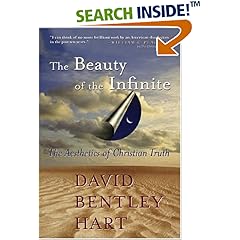
All done with The Spirit of Islamic Law and am now moving on to The Beauty of the Infinite by David B. Hart, an American theologian from one of the Eastern Orthodox Churches (not sure which one). I am very much looking forward to this book, I haven't read any good, difficult contemporary theology in quite some time. The truth be told most contemporary theology is mediocre, dealing with questions that are totally uninformed by persecution and mission and the reality of what it looks like to live with costly faith and grace that is not cheap.
But enough of my griping. Am interested in knowing if any of you have read this book, and if so what you thought about it. I have heard this book described as the best book of theology written by an American in the last decade or so. We shall see.
And Happy Birthday to my good friend Erik over at Of Priests and Paramedics who kindly gave me this book as a gift.
Israelis debate Torah-mandated sabbatical for the land
[Abu Daoud says: OK, so the blog is not called Islam and Christianity and Judaism, but what happens in the Holy Land affects everyone, and the article is really interesting and well-written.]
Israelis debate Torah-mandated sabbatical for the land
by Steven Erlanger
JERUSALEM: As Israel's Jews start a new year, the country finds itself in the middle of a fierce religious dispute about the sanctity of fruits and vegetables.
Rabbis are pitted against one another, the interests of the state and the religious authorities are in conflict, the Supreme Court is involved, the devout are confused and the cost of produce is rising.
And a country in love with flowers, proud of "making the desert bloom," is, in its own disputatious way, letting much of its land go to seed.
This year, 5768 by the Jewish calendar, is a shmita, or sabbatical year. Jewish-owned land is supposed to be left fallow, whatever grows there is supposed to be free for everyone, and at the end of the year, all personal debts are supposed to be forgiven.
[...]
That presumably worked fine in a primitive economy before decent fertilizer, but shmita presented problems for the new Jewish state. Zionism was founded on the notion of a return to the land, but a modern country cannot live on what falls to the ground, and Israel's agribusinesses would fail.
So a compromise was found by respected rabbis from both the Ashkenazi and the Sephardic communities of Israel, including Rabbi Abraham Isaac Kook and Rabbi Yaakov Shaul Elyashar. Charged with interpreting religious law, or halacha, they came up with the idea of "heter mechira," meaning sale permit, which allows Jews to "sell" their land pro forma to non-Jews for the shmita year, so the land may be cultivated.
[...]
Israelis debate Torah-mandated sabbatical for the land
by Steven Erlanger
JERUSALEM: As Israel's Jews start a new year, the country finds itself in the middle of a fierce religious dispute about the sanctity of fruits and vegetables.
Rabbis are pitted against one another, the interests of the state and the religious authorities are in conflict, the Supreme Court is involved, the devout are confused and the cost of produce is rising.
And a country in love with flowers, proud of "making the desert bloom," is, in its own disputatious way, letting much of its land go to seed.
This year, 5768 by the Jewish calendar, is a shmita, or sabbatical year. Jewish-owned land is supposed to be left fallow, whatever grows there is supposed to be free for everyone, and at the end of the year, all personal debts are supposed to be forgiven.
[...]
That presumably worked fine in a primitive economy before decent fertilizer, but shmita presented problems for the new Jewish state. Zionism was founded on the notion of a return to the land, but a modern country cannot live on what falls to the ground, and Israel's agribusinesses would fail.
So a compromise was found by respected rabbis from both the Ashkenazi and the Sephardic communities of Israel, including Rabbi Abraham Isaac Kook and Rabbi Yaakov Shaul Elyashar. Charged with interpreting religious law, or halacha, they came up with the idea of "heter mechira," meaning sale permit, which allows Jews to "sell" their land pro forma to non-Jews for the shmita year, so the land may be cultivated.
[...]
Sunday, October 07, 2007
Father's consent required for marriage?
From a Fatwa of a well-known and well-respected Saudi cleric, Sheikh Aziz bin Baz:
...The father must seek her permission if she is nine years of age or above. Similarly, her other guardians may not marry her off except by her permission. This is obligatory upon all of them. If one is married without permission, then the marriage is not valid. This is because one of the conditions of the marriage is that both partners accept the marriage. If she is married without her permission, by threat or coercion, then the marriage is not valid. The only exception is in the case of the father and his daughter who is less than nine years of age. There is no harm if he gets her married while she is less than nine years old, according to the correct opinion. This is based on the Messenger of Allah (peace be upon him) marrying Aisha without her consent when she was less than nine years old, as is stated in authentic Hadith. However, if she is nine years old or more, she cannot be married, even by her father, except with her consent....
...The father must seek her permission if she is nine years of age or above. Similarly, her other guardians may not marry her off except by her permission. This is obligatory upon all of them. If one is married without permission, then the marriage is not valid. This is because one of the conditions of the marriage is that both partners accept the marriage. If she is married without her permission, by threat or coercion, then the marriage is not valid. The only exception is in the case of the father and his daughter who is less than nine years of age. There is no harm if he gets her married while she is less than nine years old, according to the correct opinion. This is based on the Messenger of Allah (peace be upon him) marrying Aisha without her consent when she was less than nine years old, as is stated in authentic Hadith. However, if she is nine years old or more, she cannot be married, even by her father, except with her consent....
Saturday, October 06, 2007
Christian Split in Lebanon Raises Specter of Civil War
From NYT, hat tip to Titus 1:9:
With the Islamist group Hezbollah having brought Lebanese politics to a standstill, the country’s once-dominant Christian community feels under siege and has begun re-establishing militias, training in the hills and stockpiling weapons.
Many Lebanese say another civil war — like the 15-year one that started in 1975 — is imminent and that the most dangerous flash points are within the divided Christian community.
Christian youth are signing up for militant factions in the greatest numbers since the end of the civil war, spray painting nationalist symbols on walls and tattooing them on their skin, and proclaiming their willingness to fight in a new civil war — in particular, against fellow Christians.
“When the war begins, I’ll be the first one in it,” said Fadil Abbas, 30, flexing his biceps in Shadow Tattoo as an artist etched a cross onto his shoulder. “I want everyone to know I am a Christian and I am ready to fight.”
The struggle is over who gets to be the next president, a post reserved for a Christian under Lebanon’s Constitution, and which must be filled by the end of November. But the larger question — one that is prompting rival Christian factions to threaten war — is whether Lebanese Christians must accept their minority status and get along with the Muslim majority (the choice of the popular Gen. Michel Aoun) or whether Christians should insist on special privileges no matter what their share of the population (the position of veteran civil war factions like the Phalange and the Lebanese Forces).
With the Islamist group Hezbollah having brought Lebanese politics to a standstill, the country’s once-dominant Christian community feels under siege and has begun re-establishing militias, training in the hills and stockpiling weapons.
Many Lebanese say another civil war — like the 15-year one that started in 1975 — is imminent and that the most dangerous flash points are within the divided Christian community.
Christian youth are signing up for militant factions in the greatest numbers since the end of the civil war, spray painting nationalist symbols on walls and tattooing them on their skin, and proclaiming their willingness to fight in a new civil war — in particular, against fellow Christians.
“When the war begins, I’ll be the first one in it,” said Fadil Abbas, 30, flexing his biceps in Shadow Tattoo as an artist etched a cross onto his shoulder. “I want everyone to know I am a Christian and I am ready to fight.”
The struggle is over who gets to be the next president, a post reserved for a Christian under Lebanon’s Constitution, and which must be filled by the end of November. But the larger question — one that is prompting rival Christian factions to threaten war — is whether Lebanese Christians must accept their minority status and get along with the Muslim majority (the choice of the popular Gen. Michel Aoun) or whether Christians should insist on special privileges no matter what their share of the population (the position of veteran civil war factions like the Phalange and the Lebanese Forces).
Questions and Conversion
Loved this section from an account of a Muslim who converted to the way of Christ. He was asking questions of both religions, and I think that when you ask questions of both religions, generally speaking, people will go with Christianity. But that's just me. Check out this man's questions and ask yourself if you can answer the questions he had about Christianity:
I reached a point where I was not sure how to deal with some of the difficulties in the Bible that were very unclear such as:
1. Why four books to present the "gospel" and not one, as Quran teaches of one gospel.
2. The whole issue of Sin and the need for shedding of blood and a Savior.
3. Jesus being God and Man and the whole concept of the Trinity.
4. Did Jesus really die on the cross and was he resurrected or not?
5. How could followers of Jesus commit the atrocities that are part of the church history such as the crusades?
But also in my quest to use the Quran as my standard, and the teaching and life of Mohammad as a model for life, I had some significant difficulties, for example:
1. The whole concept of "abrogation". That God chose to reveal verses in the Quran that supersede earlier revelation in the same Quran. How an eternal revelation of God could have such time bound revelation seemed at odds with the nature of God.
2. The inconsistency of the messages, for example facing Jerusalem and then Mecca; or fornication being a sin, but one can have sex with many slave women that have no legal marriage status; tolerance and peace message of earlier revelation, but the command to fight all unbelievers in later revelation.
3. The need for revisions of the Quran to standardize it and ordering the burning of all the older copies. Why this need to leave no trace of what the edited version did not contain and why.
4. The unequal status of woman compared to men in area of marriage, rule of law, social etiquette, modesty, etc.
5. Treatment of non-Muslims in the community and the command to Jihad.
I reached a point where I was not sure how to deal with some of the difficulties in the Bible that were very unclear such as:
1. Why four books to present the "gospel" and not one, as Quran teaches of one gospel.
2. The whole issue of Sin and the need for shedding of blood and a Savior.
3. Jesus being God and Man and the whole concept of the Trinity.
4. Did Jesus really die on the cross and was he resurrected or not?
5. How could followers of Jesus commit the atrocities that are part of the church history such as the crusades?
But also in my quest to use the Quran as my standard, and the teaching and life of Mohammad as a model for life, I had some significant difficulties, for example:
1. The whole concept of "abrogation". That God chose to reveal verses in the Quran that supersede earlier revelation in the same Quran. How an eternal revelation of God could have such time bound revelation seemed at odds with the nature of God.
2. The inconsistency of the messages, for example facing Jerusalem and then Mecca; or fornication being a sin, but one can have sex with many slave women that have no legal marriage status; tolerance and peace message of earlier revelation, but the command to fight all unbelievers in later revelation.
3. The need for revisions of the Quran to standardize it and ordering the burning of all the older copies. Why this need to leave no trace of what the edited version did not contain and why.
4. The unequal status of woman compared to men in area of marriage, rule of law, social etiquette, modesty, etc.
5. Treatment of non-Muslims in the community and the command to Jihad.
Friday, October 05, 2007
Christians and the Burmese Crackdown
This is an interview with a Burmese pastor from Christianity Today:
Here is one section, but read it all, Here:
Here is one section, but read it all, Here:
Two ethnic groups—the Karen and the Chin—have historical ties to Christianity.
Pastor David, a Burmese church planter who has been working in Myanmar for the last few years, spoke with CT about the situation of Christians in the country
What's happening with the protests? Why was the sudden rise in oil prices the catalyst?
The government doubled the price on the morning of August the 15th without any prior notice to the public. So what happened is that there was a sudden raise in the price, buses and public transportation cannot operate. There is simply no public transportation, so people who need to go to work got stranded. There was a lot of chaos.
I was still in the country at that time and I knew at that moment that something was going to happen. Now before the raising of oil prices, there was a convention going on on the northern side of Rangoon. And there was already quite an atmosphere in the country: There were officials going about, raiding churches.
In fact, the Bible school that I have the privilege of directing—we had to shut it down on the last week of September with all this going on.
In the midst of that, they doubled the [oil] prices, and that really sparked the fire. And that's when people said, "we can't stand this anymore," and they began to rally. And at first it was a very small rally. It wasn't getting any international attention. It was only when the Buddhist monks began to come out and began to rally that the international community began to focus their attention on Burma.
[...]
Would they be targeted because they're Christians?
Christians usually don't have the same protection that a monk would have, simply because we are Christian and they are Buddhist. But for the monks who rally and demonstrate, there is still the moral respect that they have. There is a tradition that grants them some protections, and they enjoyed that in the midst of their rally. But we as Christians, who are seen as secondary citizens, do not have that [protection]. [...]
The Blogging Parson: The collapse of the evangelical consensus?
Interesting questions here: The Blogging Parson: The collapse of the evangelical consensus?
Is evangelicalism as a "movement" collapsing, at least in the UK? How is that related to what is happening in the USA?
What happens with evangelicalism will be important for world missions because almost all the missionaries out there trying to convert non-Christians are evangelicals. A handful are non-evangelical Protestant, and a couple here or there are Catholic. I have heard that there are Orthodox working in this area of converting the unbaptized, but I have never met one or known one personally.
For better or for worse, evanglicalism with all its warts and blemishes is carrying the torch of the church's mission to the nations.
The article at Blogging Parson is short, but here's the heart of it:
Is evangelicalism as a "movement" collapsing, at least in the UK? How is that related to what is happening in the USA?
What happens with evangelicalism will be important for world missions because almost all the missionaries out there trying to convert non-Christians are evangelicals. A handful are non-evangelical Protestant, and a couple here or there are Catholic. I have heard that there are Orthodox working in this area of converting the unbaptized, but I have never met one or known one personally.
For better or for worse, evanglicalism with all its warts and blemishes is carrying the torch of the church's mission to the nations.
The article at Blogging Parson is short, but here's the heart of it:
The common diagnosis of the problem is that, in the 60s, there were three or four leaders of the evangelical movement around whom we all (or our spiritual parents) gathered - Stott, Lloyd-Jones, perhaps Packer. Since then diversity and infighting has been the rule - disputes over charismatic gifts, women in ministry, the new perspective, social action and so on have meant that the movement has no clear common ground anymore. There seems to me to be a significant erosion of what evangelicals used to hold as points of unity: the atonement, the bible, the priority of evangelism/conversion, justification by faith, the work of the Spirit in sanctification of the believer, and so on. Reasserting these, and shouting them more loudly has been the strategy of some, but it isn't working to unify [evangelicals today].
Thursday, October 04, 2007
Abu Daoud, Abu Daoud, and Abu Daoud
Funny things happen when you Google your own name.
The first Abu Daoud on Google is this Abu Daoud:
"[He] was the leader of the Black September, the Palestine Liberation Organisation splinter group that carried out the 1972 Munich massacre. Many of its members were killed in Israel's campaign Operation Wrath of God, although Daoud was never assassinated. In 1981, Daoud claimed that the Mossad tried to assassinate him while in Poland, although it is not clear who was behind the attempt. In 1996 he was permitted to travel through Israel to attend a PLO meeting in the Gaza Strip. During that meeting, Daoud voted in favor of the resolution to rescind the section of the PLO's charter calling for the destruction of Israel" (Wikipedia).
The next Abu Daoud in Google (the eighth hit!) is yours truly.
Then there's this other Abu Daoud who helps train terrorists for Al Qaeda.
Then there's the guy who is an Iraqi refugee in Jordan who can't get a job. There's also some diving site named Abu Daoud.
Abu Daoud is also the name of the pastor who discovered the Dead Sea Scrolls up in that cave.
And all the way on page six of the Google hits you finally find the Islamic scholar Abu Daoud who compiled hadiith of Muhammad's life. He was the only one I already knew about.
The first Abu Daoud on Google is this Abu Daoud:
"[He] was the leader of the Black September, the Palestine Liberation Organisation splinter group that carried out the 1972 Munich massacre. Many of its members were killed in Israel's campaign Operation Wrath of God, although Daoud was never assassinated. In 1981, Daoud claimed that the Mossad tried to assassinate him while in Poland, although it is not clear who was behind the attempt. In 1996 he was permitted to travel through Israel to attend a PLO meeting in the Gaza Strip. During that meeting, Daoud voted in favor of the resolution to rescind the section of the PLO's charter calling for the destruction of Israel" (Wikipedia).
The next Abu Daoud in Google (the eighth hit!) is yours truly.
Then there's this other Abu Daoud who helps train terrorists for Al Qaeda.
Then there's the guy who is an Iraqi refugee in Jordan who can't get a job. There's also some diving site named Abu Daoud.
Abu Daoud is also the name of the pastor who discovered the Dead Sea Scrolls up in that cave.
And all the way on page six of the Google hits you finally find the Islamic scholar Abu Daoud who compiled hadiith of Muhammad's life. He was the only one I already knew about.
Subscribe to:
Posts (Atom)